Pages

Popular Articles :
Showing posts with label Skin. Show all posts

Itchy skin

Definition of pruritus
Pruritus is the medical term to describe the itching of the skin, which leads to scratching to soothe discomfort. The "Scratch'n" is due to the stimulation of certain nerve receptors in the skin, by substances such as histamine. This local release of excitatory substances is not always obvious cause: pruritus can exist without dermatological lesion.

Causes itching due to pruritus

Skin lesion
Itching may accompany a skin lesion. It is "sufficient" to the patient or the doctor, to recognize it for the cause of pruritus and treated accordingly. The most common situations are atopic eczema, hives (food allergy, contact, drug, or insect bites), skin by fungi (dermatophytes) infections, scabies (a highly contagious disease caused by the mite and favored by poor hygiene), sunburn (summer light eruption), insect bites, or allergies to certain drugs (drug toxidermia) finally chickenpox.

Liver disease
In the absence of skin lesions, a search for other general organic causes, such as liver disease. Hepatic cholestasis (bile blocked, badly produced and poorly drained to the intestine) causes the accumulation of bile salts in the blood, accumulation is expressed by pruritus and jaundice of the skin. Kidney disease, certain cancers, leukemia or lymphoma, thyroid disease or parathyroid glands, HIV infection, or parasitic infections also cause itchy skin.

Dry skin
If all organic causes have been eliminated, we note a dry skin (xerosis), especially during the advance in age the skin aging (senile) reacts more often with itching all kinds of aggression.

Psychological
Finally, as a last resort, it evokes a "psychogenic pruritus", that is to say, due to psychological stress. This is not the easiest to treat ...

Note: acne and rash illness of the child (except chicken pox) are not itching.

Itching: What are the risks?
The first risk is the appearance of itching skin wounds due to scratching, which can become infected (i mpétigo, erysipelas). Over time, the skin may thicken to form what doctors call lichenification. It can change color (depigmentation) or ulcerate (destruction with abrasions, ulcers).
The most serious, but not the most common risk is to ignore a general disease in pruritus without visible injury. We must therefore talk to your doctor quickly enough when the itching persists, especially when it occurs everywhere on the body.

What to do in case of itching
1 - In all cases, clean and disinfect the skin lesions if any, to prevent infection.

2 - Apply an emollient cream (which protects the skin) to protect dry or senile skin.

3 - Do not "play doctor" by applying another type of cream that you do not know the effect, or take any medication without prescription, at the risk of aggravating the situation.

4 - The right treatment is always that the exact cause: only the correct diagnosis ensures the right treatment.

When to see a doctor?
Consult your doctor if the itching persists with or without skin lesions. This avoids neglect of any serious systemic disease. Does not recognize skin lesions responsible for scratching, it will send you to a dermatologist, who will then make a diagnosis and propose a treatment that eliminates scratching himself.
In some cases, the doctor simply prescribe antihistamine tablets that do not treat disease but attenuate the skin reaction to histamine, thus scratching.

Read more

Facelift - Practical Information


What are the risks and disadvantages of this technique?

These risks common to all surgical procedures: risks related to anesthesia, risk of phlebitis, during a special operation in the face, but also specific risks:


  • Bruising: 1 case of 50, must intervene few hours after the operation;
  • Infection: rare;
  • Discrete asymmetric mobility of an eyebrow: very rare, it resolves spontaneously within 15 days to 3 months;
  • Moderate change the sensitivity of a part of the face: it resolves spontaneously within a few months.

There may also be disappointed if the information on the limits of lifting was not clear. Sometimes a kind of depression-fatigue may occur.

How much does it cost?

An estimate must be provided before surgery.
The price of a facelift varies between 6,000 and 15,000 euros. It is not repaid by Social Security or by mutuals.

Better consult several surgeons to compare prices and solutions.

Where and by whom is practiced facelift?

You have to go to a specialist official plastic surgery, reconstructive and aesthetic surgery, practicing in a hospital, clinic or private practice.

Read more

What is a facelift?

Facelift Definition

The term "facelift" means all operations to correct sagging skin, facial skin here.

Over time, wrinkles form, the face becomes more elongated, sagging cheeks and hollow shape in the middle of the cheek. The nasolabial fold and the fold of bitterness deepens, jowls appear, the angles of the lips fall, the oval face is square. The skin and muscles of the neck distended.

The intervention is therefore to tighten the skin but also the deeper planes muscle and fat, in order to smooth wrinkles and folds and redefine facial volumes. It does not touch the bone structure.

In what cases do I use it a facelift?

This operation is aimed at younger women (but also men) who wish to correct the signs of aging. It is rarely performed before the age of 40. It is better to make a first facelift before age 60, but it depends on facial features.

There are several kinds of lifting, depending on the area treated: the facelift, which acts on the middle and lower face (cheeks, chin, neck); mediofacial facelift, for the upper third of the face, facelift frontal (forehead lift and eyebrow). We can achieve together or not.

Sometimes they are associated with a repositioning of the temporal region (temples) and cheekbones, with fillings fat (cheeks, lower eyelids) or liposuction of the neck.

How is a facelift?

It is recommended to stop smoking 4-6 weeks before surgery. Must clearly define the objectives of the operation with the surgeon from photos.

The operation, which lasts between 2 and 4 hours, occurs most often under general anesthesia, but local anesthesia is sometimes possible. In traditional surgery, the scars that follow the contour of the face is hidden in the scalp and behind the ear. There is often a 2 cm horizontal scar under the chin.

Facelifts the upper face are often made under endoscopy: just 4 small incisions of 12 mm to introduce instruments and a miniature camera. The hospitalization lasts 24 hours and go home the day after surgery.
The procedure is not painful, but edema (swelling) is awkward at first. Simple analgesic treatment (homeopathic arnica granules) and antibiotics are prescribed for a few days.
Sometimes you keep bandages (Steri-Strip) for 8 days. A press-lift, a kind of elastic jersey hood is positioned before the release. It should keep for 15 days, then 15 days only at night.
Resumption of work can be done in 3-4 days, but social life is possible only after 15 days, and the resumption of sporting activities at the end of the first month.

The result is acquired largely after 2-3 weeks the swelling subsides completely within 3-4 months.
After leaving the clinic, there are two views in 20 days, then regular monitoring for 6 months.

Read more

Peeling - Practical Information

What are the cons-indications peeling?


  • They are general and local: unstable angina, uncontrolled diabetes, immunosuppression, mental illness, pregnancy, herpes facial pressure, open sores ...
  • Watch out for dark skin: the peeling can leave spots by a phenomenon called "reactive hyperpigmentation," often transient.
  • Be careful with sensitive skin and irritable: they are more prone to redness.
  • Caution with recent treatment with oral isotretinoin: Treatment should be discontinued at least 6 weeks before.

What are the costs and reimbursements different peels?

It depends on the type of practitioners and peeling. In all cases, a detailed estimate is required, with incompressible within 15 days of reflection. This type of act is never reimbursed by insurance.

Superficial peels or soft

  • Where to go? In medical esthetician or dermatologist graduates.
  • Principle: remove the superficial layers of the epidermis.
  • Indications: young skin, as a treatment for acne (comedones and microcysts), oily skin, brown spots and wrinkles, dull complexion ...
  • Products used: glycolic acid, salicylic acid (alone or combined), trichloroacetic acid (TCA 15%), resorcinol.
  • Course of treatment: The treatment lasts about 20 minutes and should be repeated 2 to 4 times a few weeks apart.
  • Consequences: scaling is fine and progressive, easily hidden. Its effectiveness is transient (1 to 2 years), but peeling can be renewed every year.
  • Sun protection: total daily for at least 6 weeks after the peel.
  • Cost: 300 euros per session.

Medium peels

  • Where to go? To graduate with a dermatologist.
  • Principle: removing layers of the epidermis and middle.
  • Indications: mature skin, as a treatment for acne scars, age spots, fine lines and wrinkles average depth ...
  • Product used: trichloroacetic acid (TCA 30%).
  • Course of treatment: the treatment is performed in a single session.
  • Consequences: the skin may itch and blushes in the preparatory phase and flaking lasts 3-6 days, with some crusting and burning sensations. Edema forms and disappears in 2-3 days. Redness may persist on the new skin the first few months. The effect lasts for several years. It may be renewed after 2 or 3 years.
  • Sun protection: total daily for at least 3 months after the peel.
  • Cost: about 1000 euros.

The deep peel

  • Where to go? At a dermatologist or plastic surgeon graduates.
  • The deep peels should be done in a clinic approved in the presence of an anesthetist and monitoring devices.
  • Principle: remove the epidermis to its depth without touching the dermis.
  • Indications: aged skin, depressed scars, acne scars, wrinkles.
  • Product used: phenol.
  • Course of treatment: application under local anesthesia and tranquilizers (neuroleptics), then puts a mask based occlusive moisturizers and soothing. The procedure takes about 1 hour 30 minutes. The mask is removed after 24 hours or 48 hours. The skin is cleansed, moisturized ... New "cosmeceuticals" are prescribed for the follow-up phase.
  • Impact: skin is raw after peeling, sometimes weeping, her face is swollen. Eviction Social 2 to 3 weeks is expected, but redness and swelling may persist for several months. The final result is visible only after 6 months. This peel is rarely renewed.
  • Sunscreen: daily and total, no sun exposure for at least 1 year after the peel.
  • Cost: about 3000 euros.
Who does what?

The procedures are performed by physicians and surgeons graduates in medical offices and health care facilities officially recognized.

Read more

Definition of peeling

Definition

Peeling is to destroy more or less deep layers of the epidermis, the skin surface to the junction, dermis, to erase the reliefs (wrinkles, enlarged pores, scars) and clarify the complexion.

It is achieved by physical means, such as cold (dry ice with cryopeeling) with some lasers or by chemical (acid). Today, the term is usually reserved for peeling chemical peels.

How does the peeling

The action takes place in three phases:

1. Preparatory phase (1-4 weeks): application home "cosmeceuticals" (lotions both "cosmetic" and "therapeutic") to dilute the "glue" that sticks the skin cells together. This facilitates the peeling to come.
2. Intervention: Using a cotton swab, the practitioner applied to the skin an acid solution which destroys the superficial cells. When it considers that sufficient cell layers were destroyed, it stops the action of the acid using a basic solution that neutralizes it. Following the indications or the thickness of the area to be treated, the nature of the acid and its concentration vary.
3. Postoperative phase: application home cosmeceuticals moisturizing properties (for "resolder" cells) and soothing.

For a superficial peel, the treatment is spread over several sessions (2-4). Medium or deep peels are performed in a single session.

Risks and disadvantages of peeling

The risks and disadvantages of peeling are:


  • Frequent and transient redness (erythema) persistent feelings of "cooking", edema;
  • Rare, sometimes reversible after reoperation: abnormal coloration ("discoloration") homogeneous or heterogeneous with light spots (hypochromia) or darker (hyperchromia). These anomalies occur either because the skin was unprepared or inadequately performed, or in case of premature sun exposure. Darker skin are at greater risk (see cons-indications). To mitigate this risk, the peels are always made in winter, between October and April;
  • Very rare and irreversible if the peeling is too deep, the acid destroys the dermis, the skin loses its ability to regenerate. The peel is then the same effect as burning.

Read more

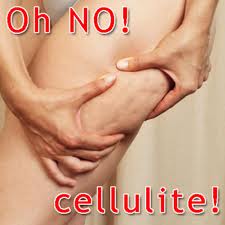
Cellulite is she a fatality? Solutions to treat

Are there solutions to cellulite orange peel installed?

Creams on the market "cellulite", the competition is fierce. Results? All that we can say is that the fact of massaging the affected areas drains water and tones the tissues. But it is not necessarily a panacea.

For several years, endermologie has the wind in its sails. This massage technique involves the now famous "palpate-roll" in a vacuum system perfected: it thus comes to the end of the cellulite resistant to diet and sport. "Just like massages and cellulite creams, treatment success is determined by monitoring the sessions and stop those techniques may quickly recover their cellulite."

What's new in the treatment of cellulite?

New treatments emerge, which combine rolling massage with laser and radiofrequency. "This is to address the heart of the problem," says Regine Bousquet-Rouaud. "Lipolysis eliminates the excessive fat, while the lasers and radiofrequency fibrosis affect connective tissue septa. This treatment stimulates the formation of new collagen more flexible and allows to densify the dermis to reduce the phenomenon of orange peel. The latest studies by ultrasound and magnetic resonance skin on the double technique have achieved very encouraging progress. "

Finally, you should know that liposuction is not a treatment against cellulite, but overcomes local fat deposits, such as "saddlebags or love handles."

Read more

Cellulite called "orange peel" definition

With 98% of affected women, cellulite is often seen as a common fate. Unlike men, almost no woman escapes padded buttocks, thighs orange peel. Why this injustice? Due to a combination of genetic, nutritional, hormonal, venous and skin aging. The dermatologist says Régine Rouaud Bousquet-cellulite "enlarged lobules of adipose tissue, fibrosis of the connective tissue that spans lie between these lobules, water retention therein imprisoned and sagging skin or less important depending on the age. "

Causes and mechanisms of orange peel

Specifically, a diet rich in carbohydrates promotes fat storage. Carbohydrates, once converted into triglycerides, are housed directly in adipose tissue. The orange peel effect is compounded by the stiffening of the connective tissue fibers, these partitions across the adipose tissue between the muscles and skin. This fibrosis increases with age and associated with a decrease in skin elasticity, increases the effect padded. Venous insufficiency and varicose veins also promote cellulite by trapping water in the wrong places.

Finally: "Some hormonal phenomena emphasize the development of adipose tissue and the phenomena of water retention, which is why women keep cellulite even after a diet. Unsuitable pill containing estrogen and too some progestins may increase and cellulite, ".

Prevention of cellulite

Yes, it is possible to prevent the appearance of cellulite.

It must first be watching your diet, avoiding carbohydrates of rapid absorption (cakes, pizzas, chocolate bars and other goodies) and cheese, but also by drinking at least 1.5 liters of water per day to prevent water retention. It should also focus on physical activity seeking muscle areas affected by cellulite, like the famous "abdo buttocks." "The work of muscles limit the effect of tissue aging by improving local circulation, burns calories and prevents fat storage," says Regine Bousquet-Rouaud. It is best practice gymnastics or sport at least 3-4 hours per week in several sessions. Doubling the effort (one hour per day), it greatly improves the aesthetic correction ... but Will is this discipline?!

Read more